empty
Recent Comments
John Ottaway on A father’s day poem, but… robinince on A father’s day poem, but… Brett Smith on A father’s day poem, but… Margaret McNaughton on The Book Fast Must Begin Nik on A Mess of Thoughts on Jokes an…
This is a little poem about those times when you think of the time when your children will be grown, still friends, but differently. Written after we walked around the woods where we built a den and saw that it was now gone.
you don’t need a storyteller now
your bedtime is autonomous
but still one snuggly hug
for safety from the sandman
is today the day
is this our final den?
we dragged the sticks
rolled the logs
made jokes of passing walkers
and their odd shaped dogs
you found our latest furniture
a worn and mossy tyre
I suddenly shouted out
“mind the barbed wire’
You nodded.
And Retreated.
Damp bummed we sat
and viewed our architectural feat
I phone filmed your pride
for the archives of things done
in the woodland adventures of the father and the son
some days, walking hand in hand
I secretly mourn for the days not yet gone
the days that seem like Shepard sketches in an AA Milne
when every beach is a post war postcard
the blue too blue in my recall
your freedom is necessity
but not yet
just wait a little bit
let’s pond dip for skaters with a net
build another sofa train
a kick around
a search for that errant lego piece
eventually found in foot.
Let’s read Peanuts at dusk
let’s dig and splash and play and mime laser deaths in outer space…
and then I’ll let you go
and kick the twigs alone
but let’s have one more day… just one more day
My book fast has begun.
It officially began yesterday, though I haven’t bought a book since Tuesday, unless you count Uncut Magazine’s bumper Nick Cave special. My last book shop in a bookshop was at Islington’s Oxfam, where a bought a hundred year old collection of science essays from the Daily Telegraph covering subjects such as caterpillars, the feeble-minded and the excessive rutting of the working classes and other occupants of Gin Lane and something about Nietzsche’s last sane year before he hugged a horse. My dare to myself, one that will deform and impoverish the shape of my day, is that I will not buy another book until I have managed to get rid of one thousand books. They teeter and topple across the house, a delight for bibliopath firemen in a dystopian future. I have to be honest with myself. I am in my fiftieth year, am I really going to read or need all these books before I die? I have a shelf of Bertrand Russell books. I like the look of it. The spines cross decades, but I’ve only really read four of them and dip into a few more, so surely I can remove seven of eight of them and not miss them when they are gone. The first edition and dust wrappered Fact and Fiction and Human Society in Ethics and Politics are first to go, plus a biography of his political life and another couple of essay collections. Will I really read all those Slavoj Zizek books and, more importantly, will I understand them? Did Somebody Say Totalitarianism make it into the pile of things to be lost, but the rest survive the first cull, my delusions of ability saving them. Fantagraphics book in Supertrash is not saved, nor a compendium of interviews by Joan Bakewell.
My good intentions with Susan Sontag can probably be maintained by keeping The Susan Sontag Reader and On Photography, while the a few other anthologies can join the stack. Owning books is not the same as reading them, I have to remind myself. I imagine the stacks as an extension of my brain, or potential brain, but really that is all arrogant optimism. I have to quieten the internal debate quickly or almost all will be saved.
“Do I really want this book?”, I ask as I look at a copy of Carver Country – The World of Raymond Carver. Of course I do. That is why I bought it, but I bought it in a fictional world where time was more malleable and open and empty. Look for too long at anyone, and they slide back into the shelf, often not being opened until the next time I try to purge.
By the end of today, I have reached the first eight percent of the target thousand. It gets difficult from here. I think my local Oxfam is so full now that they will be saved the burden of gift aiding my donations. If I drove, they would become part of the scenery for my stand up show, but sciatica and public transport put pay to that set. I will be donating some to a prison library and some will be available at gigs with a collection bucket next to it, probably for CLIC Sargent and Sophie Lancaster Foundation.
The lobotomising of my shelves must continue, for the sake of the foundations of my house and the sanity of my family who can find themselves trapped in a tatty Borges nightmare for days on end. The attainment of books seems benevolent as obsessive compulsions go, but I wonder of the clutter of my surroundings leads to the clutter in my head. I will be cured or destroyed.
“you can’t say anything anymore,” say the people who seem to be saying everything.
The free speech squabbles have become dominated by people who celebrate bullying and spite or just people who don’t seem to realise that some people don’t need to wait for your joke at their expense to feel the sting of derision and dismissal, they may also be getting it from the moment they leave the front door. It’s much easier to say, “a joke’s a joke” if you don’t live a life being dismissed as a joke or unwanted outsider or freak.
There are also people who seem addicted to being affronted. The problem with being in a constantly updated present of opinion delivered to your screen is that you can fail to check context or pause to reflect or research. It is making it harder to have a conversation, they get shut down at the first hint of deviating from the prescribed ethics of righteousness. We are also very good at laughing along and defending the right to joke until it crosses our specific line, then our subjective judgement becomes an objective certainty of what is good and proper and what is sick and profane.
When I first saw the abbreviated news story of Mark Meechan and his “sieg heil” pug, he sounded like a toy Nazi idiot.
Then, I watched it all and I saw that it was meant to be silliness that teeters into grotesquerie by crossing over into taboo, like an excessive outtake from Mel Brooks’ The Producers. Then, with legal action, the murk was stirred and everything became muddier and Meechan became a vessel for those with an agenda to sail.
The problem became context.
You are removing the context of a wind up directed at your girlfriend at the moment of making it public.
You are removing your friends’ knowledge that you are a decent liberal guy. You are now someone sat opposite a dog saying “gas the Jews” for a laugh. To this new audience, you may no longer be the man you know you are.
You are in an arena filled with anti-semitic abuse and heavy with holocaust denial.
I do not believe this was intended as hate speech and I do not believe he deserves to be imprisoned. I also don’t think this whole thing should have dragged on for so long. [though since I first wrote that, the more I have seen, the more I think Meechan was knowingly creating something to wind people and seeing the people he has allied himself with, I worry I have fallen too far on the side of believing in “an innocent who went too far in error”]
The problem with words and the meaning is that they are in the ear of the beholder. It seems to be taking people longer than I imagined to get used to the internet as place to spread jokes and ideas, to think about the incendiary nature of language whatever your intentions. Talking to a psychotherapist of the issue of people who are social anxious , she told me, “people forget that we judge everyone else on their exterior and we judge ourselves on our interior.” This seems to play a part in what is being discussed, your internal intention may not be what is comprehended when it is shifted into the exterior world. And many in the outside world will make different interpretations from their own biases and background. This is a lesson to think carefully about how and where we are using language and the possibility that, out of the circle of those who know you, things can be very different. Our context and the way we are interpreted can change in each situation. When something as intricate and diverse as complex language evolves, then there will be ramifications. What this case may well demonstrate is that our legal system is not yet fully prepared for the all-immersive, culture defining world of the internet which for many is now more real than reality. That a joke about a pug’s mindless obedience has become a rallying cry for the “free speech warriors” seems utterly ridiculous.
Some of the far right seem to have picked up this case which makes the matter even murkier. Some of these free speech warriors are the same ones who seem quite happy to encourage rape and death threats to women who voice opinions they have decided they don’t like, but hey, it’s all free speech, isn’t it? Sometimes I am not sure if we are evolved enough to deal with the amount of meaning delivered to us out of its original context, it makes us very cross and confused, tribal and dogmatic.
I was going to go on about those who offend with delight and, I think, frequently without empathy, but I will save that for another time. My starting point may well be that the dismissal of anyone who is offended as “that old easily offended brigade, fuck them” means no one learns anything and it may well be that some have a story to tell which may make us think a stance or two, but I would say that, bloody bleeding heart liberal…
Free speech used to seem to be something promoted in the hope of advancing civilised existence, now it seems to be promoted by some in the hope of dragging us away from it.
Please feel free to leave your comments under this. I have not followed the case intensively so you may want to pick me up or lead me into some other area.
I am on tour across the UK – Wolverhampton, Exeter, Lyme Regis, Birmingham and Soho Theatre and lots lots more. Dates here
Rik Mayall would have been sixty today. He is the main reason that my ungainly employment for the last twenty five years has been shouting at strangers for money. A few weeks ago, I hosted an event where we showed Bad News Tour and then I chatted to Adrian Edmondson and Nigel Planer. The theatre was full of joy and Motorhead T shirts. As I watched it I thought, “my god, they were so young when they became stars and so brilliant, too.” Now I am 49 and they are entering their seventh decade. The teenage memories of worship are still powerful, the desperation to place every Comic Strip, Wogan appearance, every Dangerous Brothers split second on Betamax tapes, little realising that one day there would be instant access via “an information superhighway” that would be a library of nearly everything bloody ever, and yet it still can’t answer the question of whether John Noakes’s nob was bigger than Heathrow airport.
On the day Rik Mayall died, I wrote this.
I walked out of a toilet cubicle to see Michael Legge standing motionlessly in front of me. He stared at me, as he often does after standing outside toilet cubicles, but then started to say something in the manner of mournful bad news, “Rik Mayall is dead.” We walked through the streets of Leeds curling our lips and reciting Rikkeries.
Rik Mayall was my comedy idol.
My first memory of a 1980s obsession is sitting in the back of a Capri with my sisters insisting I do my Kevin Turvey impersonation. I needed little encouragement for my unbroken voice to attempt the swoops of outrage and incredulity, and snorts of self-congratulation, that drove Rik Mayall through Kevin’s failed attempts to examine sex, work and tarmac.
This was my first taste of alternative comedy, followed by Alexei Sayle’s appearances on OTT. These were the things that made a nearly teen realise what he wanted to do with the rest of his life. This was my punk, and many others too. We were just too young to have our future shaped by listening to The Clash and The Sex Pistols, we had new wave and two-tone to be box bedroom rebels to, but it was alternative comedy that had the cultural kick to knock us into teenage shape. Here was comedy your mum and dad didn’t understand – sweary, dirty, snotty, loud and stupid. Here were the lines drawn between youth and age. To further the delight, Rik also mocked exactly that rebel pose. We were drawn to the People’s Poet to laugh at him, while also knowing we were him…just a little bit…maybe a little too much…how many political badges did you have on your Oxfam suit jacket?
Colin, pisspoor bassist with Bad News, who is mainly in the band as he has some money, was a similarly deluded middle class kid pretending he was an edgy hedonist who sometimes caused curtains to catch fire as he was snogging women.
Rik Mayall was a great at playing deluded virgins, which is exactly what we were.
The utter commitment, the feral energy, the wide-eyed indignation, the violence, he was a dervish on stage and totally mesmeric. All words I use fail dismally to capture the tears and spasms of laughter that he generated in me. How many times did I watch every episode of The Young Ones and The Comic Strip Presents… Their potency never seemed to dim.
Rik Mayall stepping sliding in dog shit, then stepping in it again in a socked foot after removing his shitty shoe, hobbling cak-footed to his front door and shouting, “mummy. mummy. MUMMY!” – I fell from my seat at the Prince Charles cinema, gasping.
A few months later, I saw a cinema double bill of Mr Jolly Lives Next Door and Didn’t You Kill my Brother? Oddly, looking back, I adored Alexei Sayle’s film, but found Mr Jolly just too loud and chaotic. Once it shrank back to TV size for its Channel 4 outing, I realised it was a vomity masterpiece. Rik Mayall’s grotesquerie was maybe too much for the cinema screen, but it jolted the small screen to manic life.
I used to study him and wonder what it was that made him so funny.
I pondered the eyes – the irises of his eyes were small enough that the white of the eye could be seen all around them, that wide-eyed intensity looked right at you. It grasped you and never let you go.
The lips – sneering lasciviously, sneering arrogantly, snorted up with flared nostrils like Kenneth Williams with bloodlust.
His face and body were jittery and anarchic, just the right amount of fear of the unexpected in the audience to enrich the laughter further. In The New Statesman though, he moved like a slinky reptile, the loungiest, and lizardiest of them all.
His voices were the sort of comic voices everyone thought they could imitate, they infected you.
And then there was that energy, that “fuck you, I think you’ll find the next scene you’re playing with me will be mine, just relax and watch, then start acting again when I walk out of frame, though give it a few moments for my love and applause to die down”
The people’s poet is dead…but how can he be dead when we still have his poems
Fart gag follows.
In a burpier, fartier, stupider way, Rik Mayall inspired my generation as much as Joe Strummer inspired the ones a few years previously. There are writers, comics, and actors whose possible futures changed when they saw him for the first time. I grew up to be a professional idiot, thank you Rik.
1574 gin and tonics please Monica, large ones.
FOOTNOTE
By the way, I wasn’t exaggerating, Rik Mayall’s influence on many of us really was huge, possibly bigger than John Noakes’s nob (even erect)
FOOTNOTE AGAIN
(I saw Rik in Simon Gray’s The Common Pursuit with my friends Heather and Carolyn – we only had shop assistant jobs then, but we still spent all our money to make sure we could get front row seats. We looked up his nostrils for two hours)
I am currently on tour across the UK – Eastleigh, Corsham, Newcastle, Aberdeen and Glasgow are all imminent plus a Soho Theatre run and lots more places. Details of all HERE.
Book Shambles has returned. The first episode is with comedian, producer, director, actor AND broadcaster, Jeff Garlin.
To tie in with its return, here is my reading and seeing diary for January. Much of January has involved working on the third draft of my own book, which has hampered but also focused me. Fortunately, I have had enough traveling – Belfast, Toronto and Oslo – to leave me in waiting rooms and in transit where I turned thumb twiddling into library time.
My reading recall is abysmal, so this exercise is partly to remind me of what I have read.
Last Look by Charles Burns (GOSH comics, Berwick st)
A creepy and disconcerting comic book trilogy of one man trying to digest, comprehend and repair his big mistake via his own nightmares and reality. Includes sweary reptiles and slimy eggs.
The Three Stigmata of Palmer Eldritch by Philip K Dick (Oxfam Books, Berkhamsted)
It’s boom time for Philip K Dick again with his paranoid and claustrophobic dystopias being pawed over by people who hope to find solace in their reality not really being a reality at all. I found this one to be the most disconcerting of his novels that I have read so far. It is also the one where I found his shortcomings on creating female characters was at its most distracting. I’d summarise it as “Phwoar, she wasn’t wearing a bra… but would she betray him?”
Mercy on Me by Reinhard Kleist (GOSH comics, Berwick St)
I haven’t read Kleist’s comic book on Johnny Cash, but having read this one inspired by the life and lyrics of Nick Cave, I will. A fiction and a reality, based on Cave’s life it is brutal, tempestuous, elegiac and enigmatic, so it is perfect for Nick Cave admirers and anyone who wonders if they should have an interest.

I am Alive and You are Dead: A Journey into the Mind of Philip K Dick by Emmanuel Carrere (a charity bookshop on Bath Road, Cheltenham)
I have been warned that, as well-written and intriguing this biography by Emmanuel Carrere is, he does use the licence of novelist every now and again. Then again, what biographer can ever produce an objective account of a human (or Lark or Monkey). At times, Dick comes across like patriarchal movie ogre, The Stepfather, but he is never less than fascinating and this gives a good window into what paranoias were being fed off to create each novel.
What the Fuck Did I Do Last Night by Rowland Rivron (Amazon)
A very entertaining account of a drunk man persuading TV executives to make chat shows where host and guest would float in the Thames. Also a reminder of why Set of Six is brilliant and still worth visiting (when Steve Nieve read the scripts, he said “you can’t make this, it’s too sad.)
A lovely look at a pissed up innovator driven by joy and booze.
Inventing Ourselves: The Secret life of the Teenage Brain by Sarah-Jane Blakemore (Advance copy)
Do you have a teenager? Have you been a teenager? Are you a teenager? If you answered yes to any of those, this book will prove enormously useful to you understanding yourself or your offspring. Sarah-Jane is a highly respected neuroscientist and this book covers her specific area of expertise. Amazingly, it is only in the last couple of decades that the teenage brain has been considered to be in a separate class to child brain and adult brain. The book is concise, comprehensible and enlightening.
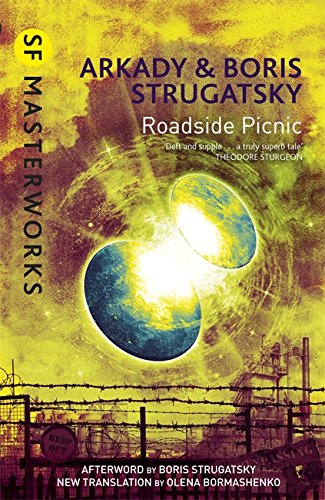
Roadside Picnic by Boris and Arkady Strugatsky (£3 bookshop in Park St, Bristol)
My favourite book of January, this book became Andrei Tarkovsky’s masterpiece, Stalker. The book is very different, but no less intriguing. It is an adventure filled with ideas – technological, scientific and philosophical. I read it in one sitting.
Sally Heathcote – Suffragette by Mary and Bryan Talbot (GOSH comics)
The story of a fictional suffragette which highlights the bravery of that movement and the brutality and dunder-headedness of many who opposed it.
Unlucky Wally Twenty Years On by Raymond Briggs (Keats and Chapman)
I love that Raymond Briggs is adored for The Snowman but rather than capitalise in that he creates books about nuclear holocausts and knobbly kneed bachelor outsiders. This is the latter.
Everybody Lies by Seth Stephen Davidowitz (advance copy)
What can we learn if we analyse google searches? Quite a lot it seems. A book on big data and how it can reveal the truth of human desires, needs and beliefs. I have learnt about horse heart left ventricles, pregnant mother needs, where racism festers and many counter-instinctual ideas that illuminate our baser natures. And all from the pen of a Leonard Cohen fan, which makes Seth trustworthy in my eyes, though the statistical research on that isn’t in yet.
The Nao of Brown by Glyn Dillon (a gift from Josie Long)
a beautifully realised comic book about a young woman trying to live with obsessive compulsive disorder
Believing is Seeing by Mary Anne Staniszewski (Oxfam, Wimbledon) – a series of lectures on art that help change what you see in a painting and also working out when art becomes art – from Sheelah Na Gig to Neo Dada.
Oh, and I am nearly at the end of Will Eisner’s Signal from Space.
Books begun in January and to be continued
Watling Street by John Higgs – find out the mystical inspiration behind Milton Keynes
This is Memorial Device by David Keenan – discover the truth of the fictional post punk bands of Airdrie in this inventive novel (particularly delightful for anyone who still has the ink from the fanzines they made under their fingernails)
House of Psychotic Women by Kier La-Janisse – the author looks at the psychotic woman in film and uses it to explore her own mental health.
The River of Consciousness by Oliver Sacks – the final collection of Sacks’ beautiful and humane writings, these particularly focus on Darwin, Freud and William James. The opening essay on botany is delightful and will change the way you view marigolds, beetles and creepers. Just lovely.
The Mysterium – another of Jo Keeling and David Bramwell’s encyclopedias of the peculiar. a perfect contemporary take on the extraordinary for people who were brought up on The Unexplained magazine.
If This Isn’t Nice, What Is? – the collection of Kurt Vonnegut’s graduation speeches, worth choosing one to start each week with.
And So It Goes – Charles Shields’ biography of Kurt Vonnegut, worth reading to get a sense of a revered writer’s long struggle and to understand Vonnegut’s humanism and its sometime failure.
Face to Face – a collection of Richard Cork’s interviews with artists. Only read Francis bacon’s so far, but it has already changed how I look at his paintings.
Book Shambles is back this week. We start with Jeff Garlin, then Stewart Lee, Lucy Cooke, Jenny Landreth, Andy Weir, Ricky Gervais and lots more.
I am off on tour – starting in Chipping Norton then across the UK – Aberdeen, Newcastle, Hove, Exeter plus 36 more locations and ending at Soho Theatre. Details here.

Here is a piece I wrote about Tom Baker for the Mark Millar edited Big Issue.
Oh the giddy nausea of excitement when the Doctor Who theme tune began on a Saturday afternoon. Who is my Doctor? Tom Baker, of course. Who is yours? If it’s not Tom Baker then you are wrong. After 40 years, his eyes still make a connection from beyond the screen. His friend since drama school, sociologist Laurie Taylor, put it succinctly, “Tom peers around the side of the character”. Or as Mark Gatiss put it, “his air of Olympian detachment”.
He possesses the best qualities of humanity, even when he distances himself from humans. Like the wonderful Alastair Sim, there seems to be such madness and kindness within, and mischief.
He was told he would never make an actor, his own personality was too big. Like Christopher Walken, he inhabits a character but does not leave himself behind. How much I would love to have seen his performance of Oscar Wilde, I can imagine the perfect blend of intellectual, bon viveur and outsider.
The myths and legends of Tom Baker are many.
Did he really kidnap all the toys from Play School, Hamble, Big Ted and all?
What of that moment he was being driven around and suddenly realised he wanted to watch that night’s episode of Doctor Who. Seeing some kids’ bikes leaning against a house, he got out of the car, tapped on the door, and asked if he could come in and watch Doctor Who with them.
He was a famous drinker in Soho, hanging around with Francis Bacon and “hammering the optics” of the west end drinking clubs with the proceeds of his many voiceovers.
In the history of voiceover outtakes, his haranguing over the correct pronunciation of “tarpaulin” stands up with Orson Welles’s frustration over the sentence structure of an advert for frozen peas and Colonel Sanders repeatedly fumbling and gabbling his lines about “his new fried cripy chicken with a crisp crumb coating”.
He was happy to utilise Doctor Who to enhance his already powerful personality to get what he wanted. Drunk in Putney late one night, he stood in the middle of the road as cars sped by, shocked to see a timelord in their path. Eventually getting on to a bus, he asked if he could be taken to Sloane Square. The driver explained that wasn’t on the route, but as the bus as otherwise empty and this was Doctor Who, he went a mile and half off route to get Tom Baker home.
More recently, I can think of few more wonderful moments on Have I Got New For You than Baker seeing a photograph of Angus Deayton and suddenly quoting ee cummings, “how do you like your blue-eyed boy, Mr Death”.
His Doctor Who was a unifier of odd boys and girls. The young eccentric with their face pushed in the mud was offered hope by this most peculiar and charismatic figure.
Tom Baker tells a rather beautiful story of being recognised by a man in Oxford Street. After some incredulity that it really is Baker, the man says, “I was in a home for children; nobody wanted us…it was terrible. You made Saturday night good”. Close to tears, the man stopped talking, and looked at Baker with an expression of “no more needs to be said” and gave the thumbs up. And for Baker, “it was a knighthood. Just thumbs up…it’s incredible isn’t it?”
When Mark Gatiss interviewed him at the BFI, he asked what he thought of the other Doctors.
“There were OTHERS?”
I am back on tour with a show about art, death, love and physics – 40 dates across the UK from Chipping Norton to Soho via Hove, Halifax, Exeter, Swindon, Aberdeen and many more. Dates and details HERE
An audience of 24,000 spread over nine shows in eight cities in fifteen days, and now the Australian and New Zealand tour is done.
We left London twenty days ago and return shortly after a couple of days in Hong Kong.
It appears to have been a success. Using the giant, exuberantly bright screen, Brian has burnt images of Andromeda and Friedman’s equation onto the retinas of Antipodeans. Hopefully, I have increased the likelihood of bassoons being used in amateur earthworm experiments.
As usual, we have been hugely encouraged by the quality of quantum entanglement queries that have come from the under 10s.
Now, we have to come up with a whole new show and set of images for 2019.
I also have to maintain my tenacity when it comes to lifting weights and feeling the tightening of long softened muscles without the help of Steph, tour trainer and fitness wrangler.
We have been spoilt for wine and cheese. We have also been able to spend the day predominantly thoughtlessly as the tour expertise of Caroline and Simon meant that as long as we were in the lobby on time, we would find ourselves in another loading bay in another city without recourse to any of our own ingenuity. (and thanks to Matt, Mark and Fraser, a remarkable tech crew)
With the exception of Melbourne, I have managed to make it to at least one gallery in every city.
I have taken in exhibitions of Robert Mapplethorpe, Gerhard Richter, Dunedin occult art, hyper real fleshy fair visitations and my favourite exhibition of 2017 in either hemisphere, Pipilotti Rist.
I have gone backwards on book rewriting. When I landed in Singapore, I was on page 135 of my rewrite of I’m a Joke…and So Are You, I am now back to page 62. I have cut out 9000 words, but added 11000.
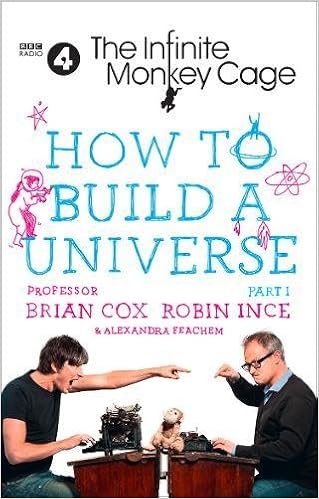
I have signed 460 copies of The Monkey Cage – How to Build a Universe…part one book, and read I Hate the Internet, Fight Like a Girl, The Sick Bag Song, Bomb Culture and two books about Tracey Moffatt.
Both those Tracey Moffatt books were bought on this trip, plus the books to accompany Hyper Real and Occulture exhibitions, as well as books on the history of British magazine design and the work of Grace Cossington Smith.
I have tour small bottles of orange scented body wash, three complimentary toothbrushes and an airline lip balm.
My skin colour is a little darker than it was three weeks ago, but still predominantly pale blue. And Brian and I haven’t had a single argument caused by an equation, which may mean we are due a lot of equation rows during the next series of Monkey Cage.
And that is what I did in my holiday.
Tickets now on sale for 2019 tour with Brian Cox.
My solo tour begins again in Dartmouth, then across the UK and some stop offs in Toronto and Oslo.
We also recorded a few lo fi podcasts dealing with hifalutin questions
I have a fascination with old school comedians that has been interfering with my sleep patterns. Through a series of moves via Mick Miller and Johnny Casson, I find myself watching a 45 minute recording of Duncan Norvelle. Best known in the 1980s for his catchphrase “chase me” and singing Teddy Bears’ Picnic, this was twenty years on from his heyday. What is interesting to me is that once you’ve found your act, there is very little changing it, not dissimilar to the music hall acts that would keep going with the same twelve minutes from town to town until television put paid to the longevity of your gurning, slapstick dance. But it is obvious to see that Duncan Norvelle knows how to play a room and his well-rehearsed cheek and speed has charm. I also wasn’t expecting him to be able to do a very good Richard Burton impression (it’s at 14′ 40″).
At midnight in Adelaide, after watching Professor Cox on Q and A, I made the bold decision to watch an old documentary about Roy Chubby Brown. He is a different sort of oddity to me. He has a more abrasive cheek and charm and some silliness too. Then, he gets onto race jokes, but they don’t seem to be jokes at all. It is just Daily Express nastiness, and rather than get laughs it gets caterwauls of vicious agreement from the stalls. It is a peculiar thing to watch a man dressed in such splendidly ridiculous costume, with such a plump face of mischief, deliver such a hatred on stage. I don’t think Roy Chubby Brown thinks of it as hate, but the expression on some of his audience’s faces is disconcertingly aggressive.
Who will I watch in Perth?
Probably Max Wall, a great of music hall and Beckett and a lovely face for a portrait, too.

(also, watching Colin Crompton is beautiful walk through post war cultural changes. He also tells my favourite hoop and stick joke)
Monday is a travel day. Brian travels to Sydney for Q&A and the rest of us will travel to Adelaide late in the afternoon. After the usual workout of pain mixed the hope of the loss of the process of jellification that comes with middle age, Steph and I go to the National Gallery.
It is a great monument to brutalism and beauty. The design allows you to get confused and lost, but contentedly lost as the walls of your mistaken destination have Monet’s Water lilies or Auerbach’s Primrose Hill or Sidney Nolan’s Ned Kelly series.
Not much time to get lost on this occasion, so it is straight to the current main exhibition, Hyper Real. Hyper Real is a series of figures, some naked, some mutated, some fairy tale delightful, some disturbingly reflective of the problems of being human. When we arrive, a school party are having Patricia Piccinini’s near life size model of a man holding a Blobish fish in his hands. Her work is for the love of “monsters”. Beautifully imagined love and delight at flesh that is not as we imagine it should be. The little girl smiling with delight at the approaching at the hybrid human baby/sloth toed being (The Welcome Guest) ,the boy affectionately sleeping with a grandmotherly, mammalian mermaid (The Long Awaited).

In less fantastical form, Sam Jinks’ creates a touching figure of an old woman in a night dress hugging a new baby, its excess wrinkles of flesh there to give space to grow into, while her wrinkles of a skin that will be departed. Embrace by Marc Sijan has a similar effect, whilst his figure of an old woman, battered feet and a face that has seen too much of a wrong life seems to move. The eyes allowing you to stare into hopelessness. I am always fascinated at how the act of staring at such realistic skin leads to the mind creating an illusion of movement because that is what the mind is expecting. How can something so real be so still? Ron Mueck’s old woman in a bed disconcertingly captures that grey skin and slack mouth that means the end is very close.
Then, we ate celery at another airport and arrived in another city. A few beers, talk of Judas Priest, Q&A, Chubby Brown, sleep.
I am back to UK soon to continue my solo tour on art, death, love and physics – all across UK and beyond. Details HERE.
The Monkey Cage book – How to Build a Universe… part one – is available now.
I bumped my head on the beam of my own absurdity as I walked around Canberra’s great big lake. I risked a walk without hat or factor 50 unaware of the high, hot sun. You think I’d have been aware of the Sun after two weeks touring with a cosmologist. I sensed I must be purpling by midday and scurried, bad temperedly, for shade. Fearing sunstroke, I skipped the gym workout and hid under a sheet for a while, then went off to the galleries.
Australian cinema was exotic and arcane when I was young.
The seventies had seen Australian filmmakers making their mark internationally and so by the 1980s, BBC2 would run series of Australian movies. They were arthouse by the very virtue of not being in the usual language of Hollywood or Ealing. Generally, the BBC would skip Alvin Purple Rides Again, Barry McKenzie Holds His Own and Mad Dog Morgan, in favour of Heatwave, Picnic at Hanging Rock and My Brilliant Career.
The National Gallery in Canberra currently has an exhibition of on set images, movie fan scrapbooks and the occasional spangly dress, from Australian movie history.
It was a reminder both of youthful favourites and also of how parochial film distribution is. Many photos on the wall were from films that have never made it to a UK cinema screen with the exception of specialist festivals at the Barbican or NFT.
I have only recently seen Wake in Fright, a revered and loathed thriller involving a teacher who finds himself trapped in an outback town where seamy criminality is the norm. It’s images of festering immorality outraged some Australians in the same way Les Patterson did.
At an early screening, one infuriated audience member stood up and declared, “that’s not us.”
Australian screen icon Jack Thompson yelled back, “sit down, mate, it’s us.”
As The Cars that Are Paris and Wolf Creek have shown, the long tracks of arid loneliness in Australia are good for creating threat to outsiders unused to a fragmentation of urban civilisation.
Meanwhile, Peter Weir’s Picnic at Hanging Rock demonstrated, one of the works more heavily illustrated in the exhibition top, this is a landscape where the uncanny may never be that far away.
Many great Australian films are represented – The Getting of Wisdom, Shine, Don’s Party and I was glad to see the inclusion of Howling 3: The Marsupials. Directed by Philippe Mora, he was also responsible for Christopher Lee’s finest filmed singing performance.
The Year my Voice Broke is one of my favourite Australian films of the 1980s and the reason I own four Lawrence Durrell books, none of which I have read.
I still consider Mad Max 2 one of the greatest limited dialogue, maximum action movies and the image of the beaten, bruised, leather clad, knee callipered Max Rockatansky staring belligerently at the camera is an iconic memory. Oh when would the video rental shop believe I was 18.
This exhibition also reminded me that I needed to watch The Last Wave, Chant of Jimmy Blacksmith and The Getting of Wisdom. The one failure of the exhibition was the lack of any reference to Razzle Dazzle: A Journey Into Dance (screenplay by Carolyn Wilson and Robin Ince)
It is always good to see an exhibition with some framed images of Leo McKern, who I was fortunate to see on stage in Jean Anouilh’s Number One at the Windsor Royal (adapted by Michael Frayn).

Now, I have to continue my search for those elusive Ozploitation boxed sets I’ve been seeking for three years.
I was reminded that I still haven’t seen The Cars that Ate Paris, stuck in my mind since I was nine due to the image of a multi-spiked VW beetle that appeared in one my Lorrimer books of horror, perhaps it was in Speed, Savage Cinema or maybe even David Annan’s Robot: The Mechanical Monster. The Peter Weir boxed set was immediately ordered, to be enjoyed in the cold, long dark nights I am returning to.
Then, I returned to the hotel and we all ate cheeses, had 5 puddings and finished the day watching my favourite short film of the year, Brian and Charles. Now, I need to watch Muriel’s Wedding and Turkey Shoot. (And maybe Patrick, too. Where were the spooky pics of the haunting ballet dancer, Red Shoes star and child catcher Robert Helpmann? My favourite Helpmann story is when a friend rang him after taking his children to Chitty Chitty Bang Bang. “Robert, you are coming to dinner on Sunday, but you have just scared my kids witless as the child catcher. Could you just have a quick word with them on the phone and explain you are an actor?” “Of course,” he replied, and once the children reached the phone he cackled, ‘I’m coming to get you, kiddies!” Oh the cruelty of ballet dancers.)
The exhibition was also a sad reminder of the shortness of John Hargreaves’ life, a wonderful presence in many movies including Long Weekend, one of the most regularly shown Australian films on the BBC in the 1980s. Oh how the animals had their day.

I am back on tour in UK soon – Bordon, Totton, Dartmouth and across the UK.
 | John Ottaway on A father’s day poem, but… |
 | robinince on A father’s day poem, but… |
 | Brett Smith on A father’s day poem, but… |
 | Margaret McNaughton on The Book Fast Must Begin |
 | Nik on A Mess of Thoughts on Jokes an… |
 Robinince's Blog